Visual Abstract: Exploring Peer Specialists’ Experiences with Spirituality in Their Work
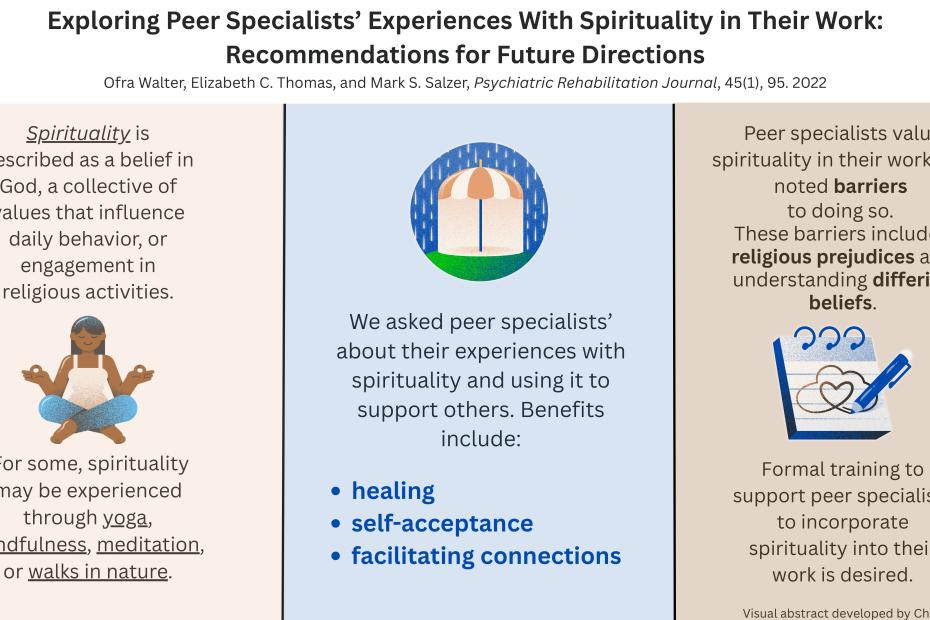
A visual abstract detailing a published article on how peer specialists use spirituality in their work and give the recommendations for future directions.
These resources offer guidance and strategies for creating welcoming environments within religious congregations for individuals with mental health conditions. They address barriers, stigmas, and provide tips for increasing participation, with examples of faith-based initiatives.
A visual abstract detailing a published article on how peer specialists use spirituality in their work and give the recommendations for future directions.
The purposes of this fact sheet are to describe the health benefits of spiritual and religious participation and to provide resources to support people with serious mental illnesses with engaging in this area.
This fact sheet for providers defines religious communities and explains some barriers that their participants might face and solutions to those barriers. It explains why religion and spirituality are important as well as giving tips and ideas on how to increase participation.
This fact sheet for consumers defines religious communities and explains some barriers, as well as stigmas, they are likely to face and solutions to them. It explains why religion and spirituality are important as well as giving tips and ideas on how to increase participation.
This video focuses on inspiring examples of faith-based initiatives to help individuals with mental health conditions to participate fully in the life of religious congregations.
Based on an extensive review of the literature and focus groups with peer specialists working in community mental health settings, this document reviews strategies for supporting peer specialists to help consumers connect with mainstream religious and/or spiritual congregations.
This document provides an overview of what is available to faith-based communities, religious congregations, and mental health organizations that want to connect people with mental health conditions and their families to congregational life based on survey data.